The holiday season compresses time in a way that catches almost everyone out. One week you are making a mental note to start early; the next you are standing in a queue at eight in the evening, buying something you do not entirely believe in, for someone you will see in three days. Shopping at independent shops does not magically fix that. A small shop in December can be just as busy as a large one, and its opening hours are far less forgiving. But it does make the whole exercise more considered, and it usually produces better gifts for the money.
What follows is a working checklist rather than a lecture about shopping small. Most of it is preparation: writing names down before ideas, checking hours before leaving the house, asking a question at the counter instead of guessing. None of it takes long, and all of it saves something — a wasted trip, a duplicate present, a return you will never get round to making.
Start with names, not with ideas. A list of people is finite and knowable; a list of possible gifts is not. Next to each name, write one line about what that person actually does on an ordinary weekend. The friend who cooks properly at least twice a week. The neighbour who has been rebuilding the same bicycle since spring. The colleague who reads on the train and complains about paperbacks getting battered in her bag. Those lines are where good gifts come from, and they are much easier to write in November than in a crowded shop on 20 December.
Then divide the names into two groups: the people you must buy for, and the people it would be nice to buy for. Most budgets do not collapse on the main presents. They collapse on the eight small ones you did not count — the teacher, the dog walker, the cousin who unexpectedly sends something. Add a note of sizes, colours, intolerances and books already read. A photograph of someone's bookshelf on your phone is worth more than your best guess.
Independent shops do not run on shopping-centre hours. A bookshop that closes at six on a Tuesday may stay open until eight on Thursdays through December. A deli might shut early on market day. A hardware shop may close for a week over the holidays while the owner visits family. Check the shop's own website or social page first, then — this is the step people skip — ring and confirm in the week you plan to go. Published hours go stale in December faster than in any other month, because staff take leave, deliveries shift and owners extend opening times at short notice.
Do not just ask "are you open on Saturday?" Ask whether they have the item you want, in the size or colour you need, and whether they can hold it until you get there. Two minutes on the phone routinely saves an hour of driving and parking. It is also the moment to ask about delivery, gift wrapping, gift receipts, and whether they can order something in. Plenty of independents can get an item from a supplier within a few days. The trick is asking in the first week of December rather than the last.
Buying locally is not a pledge to buy everything locally, and it is not a moral test. Some things are simply cheaper elsewhere, and your budget is allowed to know that. The point of shopping small is that the money you do spend goes to a person who will remember you in February, who will tell you honestly that the blue one is better, and who will take the item back without a fight if it is wrong.
That said, small shops can tempt you in ways the big ones cannot, precisely because everything looks chosen. Browse generously and buy selectively. A gift bought out of guilt is the one that ends up in a drawer, and it is the fastest way to wreck both your budget and your goodwill towards the shop.
If money is genuinely tight this year, be honest with yourself early rather than late. A smaller number of considered gifts, agreed openly with the people who matter, is a better plan than a January spent paying for December. If you are managing debt or a sudden drop in income, a free money advice service will be more useful than any shopping list.
Group your errands by street rather than by shop. Most towns still have one or two stretches where a bookshop, a butcher, a florist and a hardware shop sit within a few minutes of each other, and walking between them beats moving the car four times. Go early. Small shops are quietest in the first hour and busiest on Saturday afternoons. Bring a tote, because the bag you forgot is always the one you needed. Buy heavy items last so you are not carrying them around for an hour.
It is also worth asking whether your town runs a late-night shopping evening in December. Many do, often with markets and extended hours, and they can be a pleasant way to get several things done at once — though they are also the busiest nights, so treat them as an outing rather than a logistics operation.
The checklist is short if you strip it back: names on paper, hours confirmed by phone, a budget you have already decided on, and a willingness to ask the person behind the counter for help. That is the whole method. It is not going to make December feel spacious, but it will stop you buying things you do not need from shops you cannot remember, and it will leave a little more of your spending in the hands of people who live in the same place you do.
One last thing worth doing: keep the receipts and the shop's name together until the gifts are given. In a small shop, a return is a conversation rather than a form, and it goes much better when you can say exactly where and when you bought it.
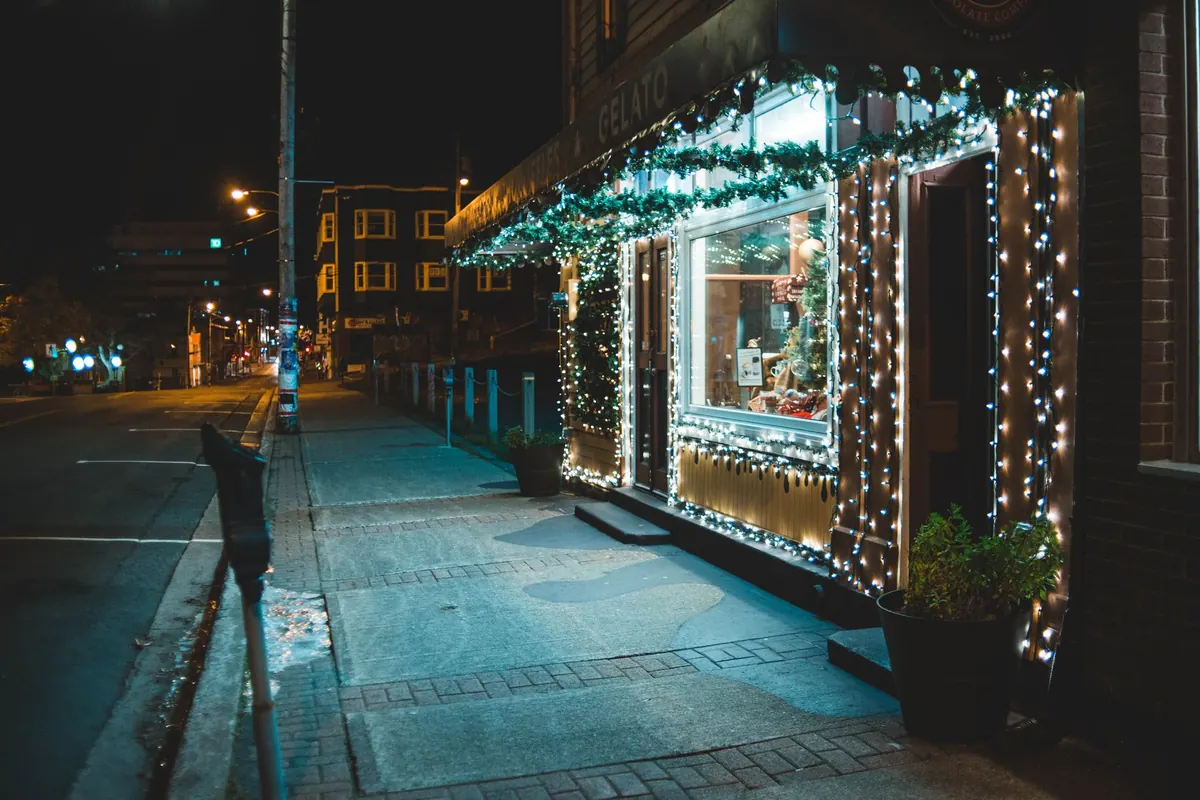
Photo: Erik Mclean / Pexels